INTRODUCTION
Karuna is also active in disability inclusive disaster relief and rehabilitation after the earthquake of 25th April, 2015 in Nepal through a holistic approach
Karuna Foundation Nepal was established in 2015 as a Nepali non-governmental organization. This organization primarily works in the fields of disability prevention and rehabilitation. This organization has been continuing the work of Karuna Foundation, an international non-governmental organization, since 2007. The central office of Karuna Foundation Nepal is in Baluwatar, Kathmandu, while the provincial office is in Itahari, Sunsari. Similarly, there are other district and joint district offices in different districts of Koshi Province.
Karuna Foundation, an international non-governmental organization, was established in 2007 and started the ‘Share and Care’ program with health insurance in Nepal from 2008 to 2011 in two village development committees in Rasuwa, Kavre and Sunsari Districts. Hence, it can be said that the beginning of the health insurance program in Nepal began with Karuna. After the successful implementation of this ‘Share and Care’ program, from 2011 to 2014, with some improvisation, a program began in the same village development committee, which was later called ‘Inspire to Care’.
Inception of Karuna Foundation Nepal
Karuna Foundation was established in the Netherlands in 2007 by Dutch entrepreneur René aan de Stegge with the vision of preventing avoidable disabilities and improving the quality of life of persons with disabilities. Shortly after its establishment, the organization began its work in Nepal, partnering closely with local communities, government institutions, and national professionals to develop sustainable, community-based approaches to disability prevention and rehabilitation.
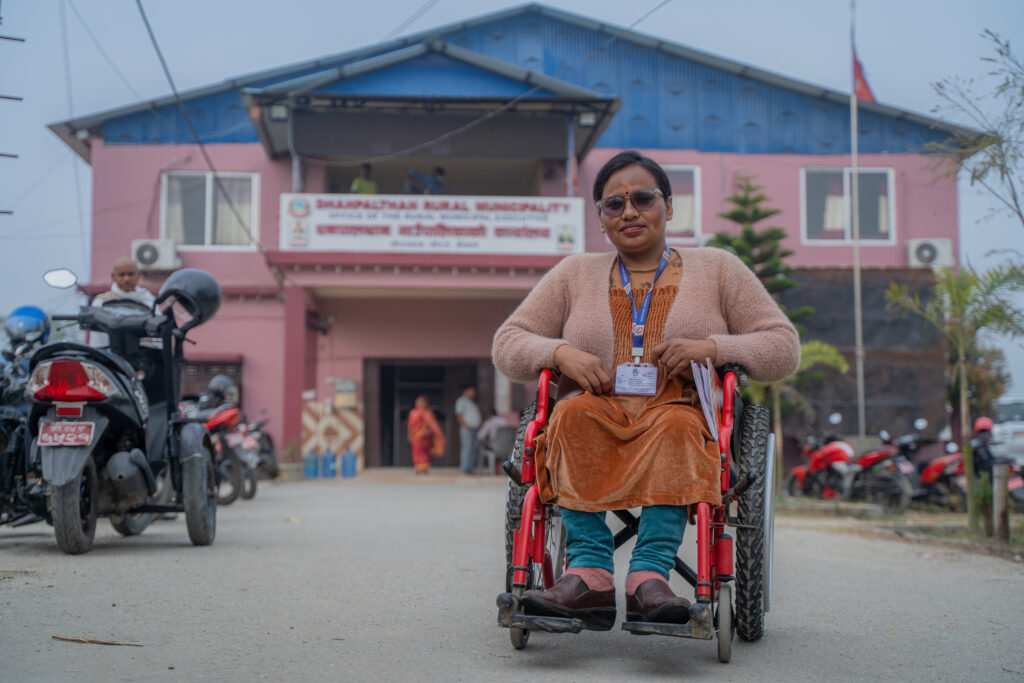
From the outset, Karuna Foundation believed that lasting impact could only be achieved through strong local leadership. Rather than relying on international expatriates, the organization invested in building the capacity of Nepali professionals to lead programme design, implementation, and institutional development. This locally led approach strengthened national ownership and laid the foundation for long-term sustainability.
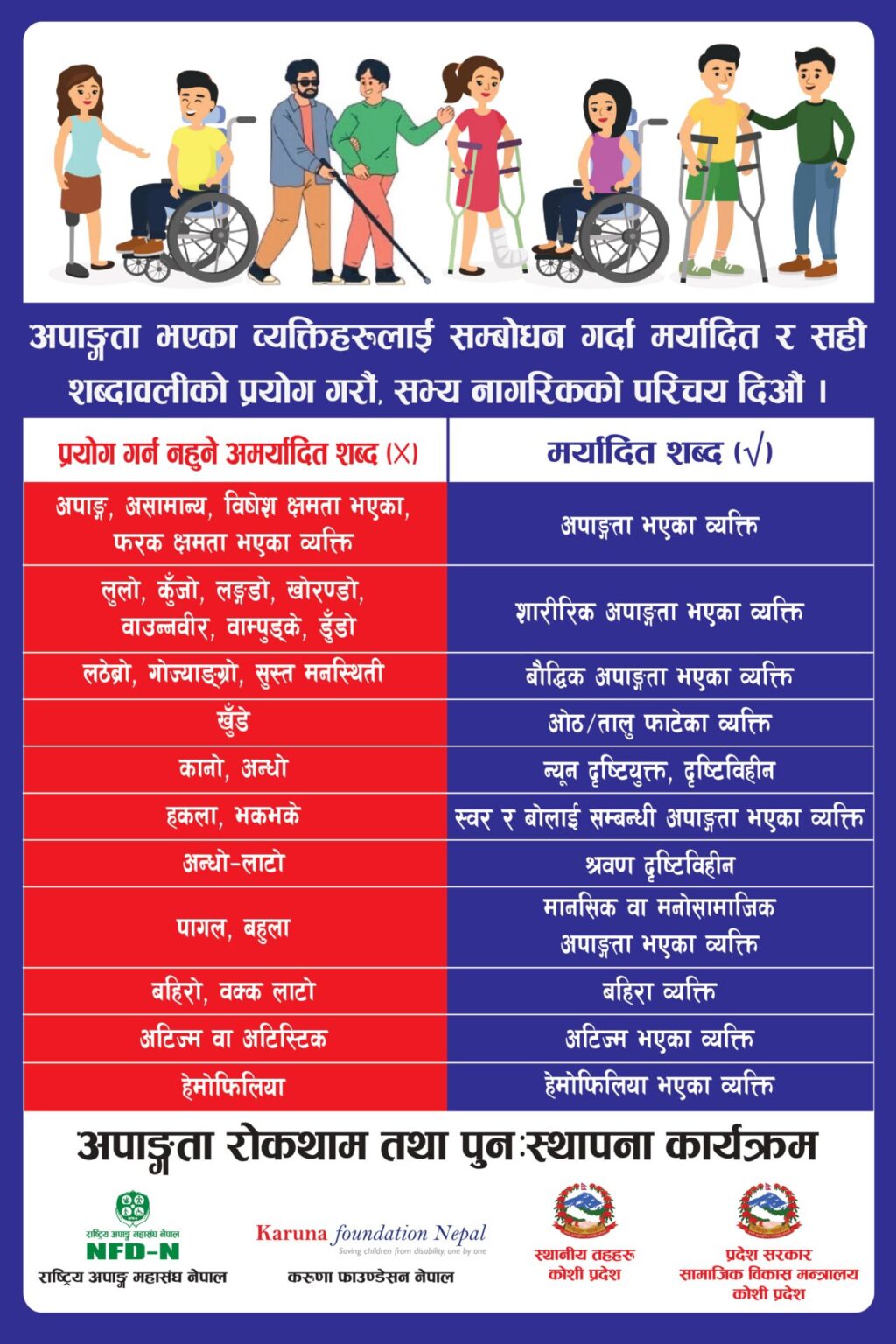
Building on the success of this model, Karuna Foundation Nepal (KFN) was established in 2015 as an independent national non-governmental organization to continue and expand the mission in Nepal. Since then, KFN has worked in close collaboration with federal, provincial, and local governments, development partners, and communities to strengthen health systems, prevent avoidable disabilities, improve rehabilitation services, and promote disability-inclusive development across the country.
Following the establishment of Karuna Foundation Nepal (KFN) in 2015, the Inspire2Care program was expanded across all former Village Development Committees (VDCs) of Ilam District between 2015 and 2018. The program successfully demonstrated the effectiveness of a community-based, government-supported approach to disability prevention and rehabilitation. After strengthening local systems and building institutional capacity, Karuna Foundation Nepal gradually phased out its direct implementation in Ilam, completing its technical support in 2022.
Building on the success and lessons of Inspire2Care, Karuna Foundation Nepal, in collaboration with the Koshi Provincial Government, local governments, and the National Federation of the Disabled Nepal (NFDN), developed the Disability Prevention and Rehabilitation Program (DPRP). The program was first piloted in 2018 in Barahakshetra Municipality, Sunsari District, to demonstrate a sustainable, government-led model for disability prevention, rehabilitation, and disability-inclusive development.
Following the successful pilot, DPRP was progressively expanded across Koshi Province through a tripartite cost-sharing model involving the Koshi Provincial Government, local governments, and Karuna Foundation Nepal, with technical support from Karuna Foundation Nepal and NFDN. The program was implemented in phases, gradually strengthening local government ownership and institutional capacity across the province.
Today, DPRP is implemented in all 137 local governments of Koshi Province, making it one of Nepal’s largest government-led disability prevention and rehabilitation programs. By integrating disability prevention, rehabilitation, maternal and newborn health, and disability-inclusive development into local government systems, the program has established a sustainable model that continues to improve health outcomes, strengthen community support systems, and enhance the quality of life of persons with disabilities and their families.
